Time loops in which only one person remembers
5 SFF Books About Time Loops in Which Only One Person Remembers
By Ilana Marsh August 14, 2026 8 min read
A one-rememberer time loop repeats a stretch of time for an entire world, then wipes it clean for everyone except a single conscious witness. That witness alone accumulates knowledge and grief across attempts that nobody else can register as attempts at all. The device sharpens old philosophical questions about personal identity, since it asks what continuity of self would mean if memory became a private, uncorroborated burden rather than a shared public fact.
Replay by Ken Grimwood (1986)
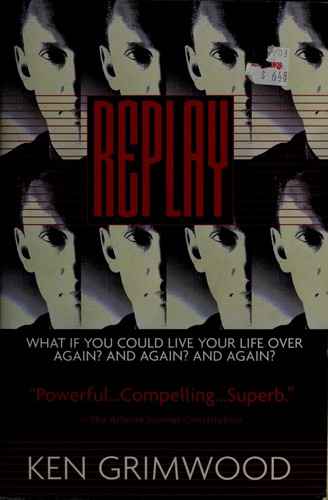
Jeff Winston, a 43-year-old radio journalist, dies of a heart attack in 1988 and wakes up in 1963 inside his 18-year-old body, carrying every memory of the 25 years he just lived. He relives that same stretch of decades again and again, dying at 43 each time and restarting at 18, trying different careers, marriages, and fortunes with the benefit of knowing what is coming. Partway through the book he learns he is not alone in this: a woman named Pamela is replaying her own life on a separate cycle, and the two of them search for others caught in the same phenomenon.
Each time Jeff dies, the world resets completely, family, colleagues, headlines, and all, while only Jeff carries memory forward into the next iteration. Grimwood uses that asymmetry to strip away the usual comforts of foreknowledge: Jeff can profit from events he remembers, but he cannot prevent the fixed points of his own life, including a death that keeps arriving earlier with each successive replay. The novel treats memory without a witness as a kind of solitary confinement, since nobody he loves in one cycle will exist to recall loving him in the next.
Grimwood worked in radio journalism before turning to fiction and gave that same profession to Jeff Winston, though no surviving interview documents why he built the novel’s memory mechanism the way he did, so that reasoning cannot be attributed to him directly. What is documented is the book’s reception: Replay won the World Fantasy Award for Best Novel in 1988, and it has since been widely discussed as a likely influence on Groundhog Day, which appeared seven years after the novel’s publication. Grimwood died in 2003, and Replay remains the work for which he is best remembered.
All You Need Is Kill by Hiroshi Sakurazaka (2004)

Keiji Kiriya is a raw recruit thrown into a losing war against an alien species called Mimics, and he dies on his first day of real combat. He wakes up two days earlier with full memory of the battle ahead, dies again, and wakes again, caught in a loop that resets every time he is killed. Over roughly 160 repetitions he trains himself into a genuinely dangerous soldier, guided in part by Rita Vrataski, a famous fighter who once looped herself and now moves through the war a step ahead of everyone around her.
The loop originates with the Mimics themselves: certain alien units can transmit a signal at the moment of death that resets local time, a defensive trait Keiji triggers by accident and inherits against his will. Only Keiji carries memory between iterations, while Rita and every other soldier experience each loop as a first encounter, forgetting even conversations that happened hours earlier in loop-time. Sakurazaka turns battlefield incompetence into the novel’s engine, since Keiji’s survival depends on converting an alien defense mechanism into a private, invisible course of training.
Sakurazaka has said the idea began with an online account by a video game player describing how dying and restarting a level allows trial-and-error improvement, which led him to imagine a soldier who ends up “being played over and over,” according to a 2014 interview in The Japan Times. The same profile notes that he studied Groundhog Day before writing the book, treating it as evidence that a loop premise could carry a genre plot rather than function only as a joke. The novel was translated into English by Alexander O. Smith and later adapted into the film Edge of Tomorrow.
Before I Fall by Lauren Oliver (2010)
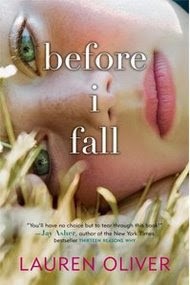
High school senior Samantha Kingston dies in a car crash on the night of a party, then wakes up that same morning and lives the day again. The loop repeats seven times, each pass letting Sam see the consequences of her clique’s cruelty toward a classmate named Juliet Sykes, consequences she was too self-absorbed to register the first time through. The novel follows her shift from trying to escape the day to trying to understand what she has been doing inside it.
Nobody around Sam has any memory of the day recurring, and the novel is explicit that no one else knows she has already died once, so every conversation she repeats lands as new information for everyone but her. The reset triggers when she dies or falls asleep, and Oliver uses that mechanism to send Sam back through the same social terrain with progressively different information, turning an ordinary teen-drama day into evidence she keeps rereading. Because only Sam accumulates knowledge across the loop, the book measures her moral change entirely by what she chooses to do differently with facts nobody else can check.
Describing the novel’s origin, Oliver traced the loop concept to a private habit of mentally revisiting happy days in close sensory detail, saying she would “walk myself back through a day or a moment that made me perfectly happy” and that the exercise “only worked when I rigorously focused on the details,” in a 2010 interview. That private ritual of replaying a day scene by scene became, in fictional form, Sam’s forced repetition of a day she would rather forget. Before I Fall was Oliver’s debut novel and was later adapted into a 2017 film.
The First Fifteen Lives of Harry August by Claire North (2014)
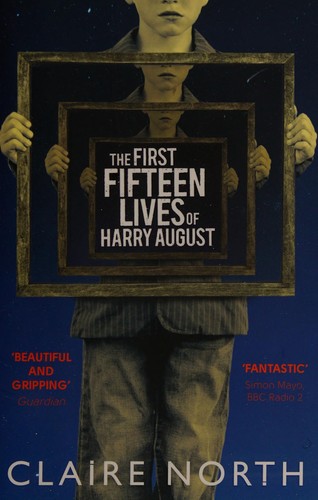
Harry August is born in 1919, lives an ordinary life, and dies of cancer in 1989, only to be born again in 1919 with full memory of everything that happened before. He belongs to a small, scattered population called kalachakra, people who are reborn into their own lives repeatedly and remember each cycle, and the novel opens as Harry nears the end of his eleventh life, when a dying child warns him that the world itself is ending sooner with every iteration. He spends the rest of the book tracing who is causing that acceleration and why.
Each kalachakra’s reincarnation is personal rather than shared: when Harry is reborn, his parents, his childhood doctors, and everyone else around him are living that stretch of the twentieth century for what is, from their side, the only time. The other people who share Harry’s condition do not experience his resets alongside him; each one loops through a separate life, remembering only their own accumulated lives, so the relationship between Harry and the ordinary world around him stays asymmetrical even though he is one of several rare rememberers rather than the only one on Earth. North uses that structure to ask what a person accumulates across a dozen full lifetimes of memory, and what they owe to a world that keeps forgetting them.
North, the pen name of British author Catherine Webb, has said the idea arrived suddenly while she was working a lighting job for the Royal Shakespeare Company in Stratford-upon-Avon, recalling in a 2015 interview that she began writing what she expected would be a short story about Harry August before realizing, thirty thousand words in, that it was something longer. She has published widely across science fiction and fantasy under several pen names, and Harry August won the John W. Campbell Memorial Award and was shortlisted for the Arthur C. Clarke Award.
The Seven Deaths of Evelyn Hardcastle by Stuart Turton (2018)
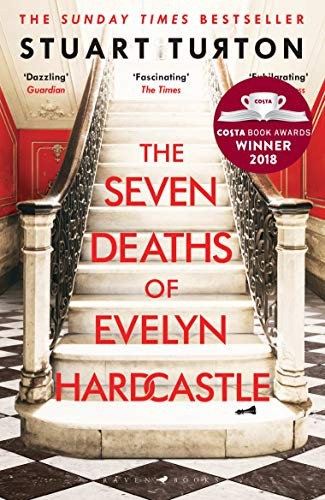
Aiden Bishop wakes in a forest with no memory, stumbles into an English country house called Blackheath, and learns he is trapped reliving the day of a murder, that of Evelyn Hardcastle, until he can name her killer. Each time the day ends without an answer, it begins again, and Aiden wakes inside a different guest’s body, watching the same events unfold from a new vantage point with new access and new blind spots. He has eight days, spent in eight different hosts, to solve the crime before the loop starts over completely.
Aiden retains his own memory and everything he has learned across every host and every day, while the other guests at Blackheath relive the same day with no awareness it has happened before, giving him information nobody else possesses. Turton complicates the usual convenience of that setup by making Aiden’s own reliability shaky in a different way, since each host body imposes its own instincts and impulses on him, so what he remembers and what he can act on do not always line up. The mystery is built so that a rememberer who could simply follow the victim around and watch her die still cannot prevent it, forcing Aiden toward a more complicated solution than surveillance alone.
Turton has described his pitch for the novel as “Agatha Christie in a Groundhog Day loop, with a bit of Quantum Leap thrown in,” a line from an interview with the Los Angeles Public Library that captures how deliberately he combined a drawing-room mystery with a body-hopping time loop. He has also discussed the structural problem the mechanic created for him as a mystery writer, since a detective who remembers everything needed a murder clever enough to still outwit him. The Seven Deaths of Evelyn Hardcastle won the 2018 Costa First Novel Award.
Explore Related Ideas
- 5 SFF Books About Space Elevators
- 5 SFF Books About Terraforming
- 5 SFF Books About Uplifted Animals
- 5 SFF Books About Generation Ships
- 5 SFF Books About Post-Scarcity Societies
- 5 SFF Books About Sentient Trees
- 5 SFF Books About Mind Uploading as Death
- 5 SFF Books About First Contact as Colonial Encounter