Terraforming
5 SFF Books About Terraforming
By Ilana Marsh May 12, 2026 8 min read
Terraforming means deliberately re-engineering a planet’s atmosphere, temperature, and water cycle until unbreathable ground becomes survivable and, eventually, farmable. Real proposals involve orbital mirrors, imported ice, and engineered microbes, and researchers still argue over whether Mars could ever hold a stable, breathable atmosphere at all. These five books treat that transformation as the central fact of their worlds: who authorizes it, who performs the labor, and what existing life is destroyed to make room for what arrives.
Red Mars by Kim Stanley Robinson (1992)
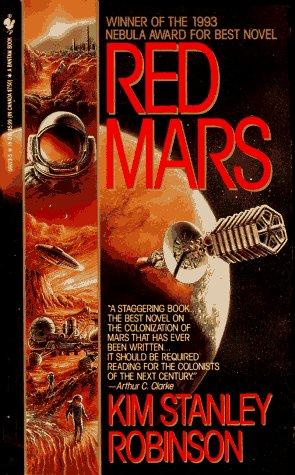
Robinson follows the first hundred scientists and engineers sent to found a permanent Martian colony, a mixed group of nations and disciplines whose personal rivalries harden into a decades-long political struggle over the planet’s future. Their central disagreement is whether Mars should be changed at all, and how fast, as the settlement grows from a handful of pressurized domes into cities that answer to corporations back on Earth. The argument outlives the founders and eventually erupts into open revolution.
Robinson builds an entire faction system, the Reds and the Greens, around competing answers to that question: Reds want Mars preserved in its lifeless state as a matter of principle, while Greens pursue atmospheric thickening, released greenhouse gases, and imported nitrogen to make the planet breathable within a human lifetime. The novel treats the engineering, from soletta mirrors warming the poles to gene-edited lichen fixing the soil, with the same rigor it gives the colony’s economics and factional politics, so that terraforming functions as both a technical project and the era’s defining ideological fault line. Its pace and cost drive the plot at every level, from personal betrayals to full-scale war.
Robinson has revisited the premise’s plausibility in his own words years after the trilogy’s success, telling Public Books that full Martian terraforming remains “a great long-term goal” but on a scale closer to “ten thousand years” than the centuries his novels compress, adding that discoveries like soil perchlorates have complicated the idea considerably. He has said that thinking through Mars as a planet under construction is really a way of thinking about Earth and about society as something still being built.
Venus of Dreams by Pamela Sargent (1986)
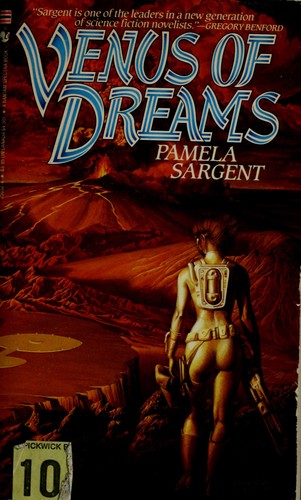
Sargent’s novel opens generations into a Venus-transformation project run by Earth’s Nomarchies, following Iris, a young woman from an agricultural settlement who dreams of leaving her hardscrabble life for the orbiting Islands that oversee the work. Her path into the Cytherian Institute and eventually into the project itself becomes a story about class and inheritance as much as engineering, since only those with the right training and family connections ever leave the ground. The novel and its sequels follow her descendants across roughly two centuries of the same unfinished project.
Terraforming Venus is a multigenerational bureaucratic undertaking here, not a single triumphant act: a nonhuman-derived faction called the Habbers supplies technology to thin the planet’s crushing atmosphere and seed it with engineered organisms, while Earth’s governments and later the settlers themselves fight over who controls the outcome. Sargent keeps the timescale honest, showing domed cities and unbreathable air still in place after decades of labor, so that the terraforming itself becomes a source of political leverage, resentment, and dependency between Earth, the Habbers, and the Venusian-born colonists who will never see a finished world. Religious and nationalist factions later exploit the project’s slow pace to seize power.
No interview or essay could be found in which Sargent discusses her specific motivations for the Venus trilogy’s terraforming premise, so none is attributed to her here. What is documented is her standing as an early architect of feminist science fiction, including her Women of Wonder anthology series collecting women’s contributions to the genre, and a career, recognized with the Science Fiction Research Association’s Pilgrim Award, that consistently placed intelligent, working women at the center of hard-SF premises usually populated by men.
Dawn by Octavia E. Butler (1987)
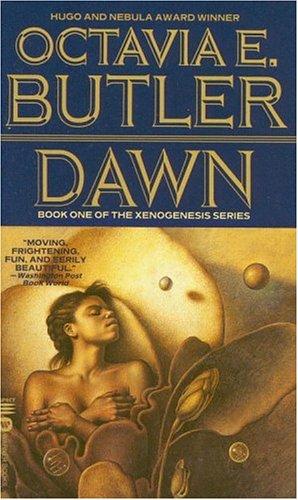
Lilith Iyapo wakes on a living alien ship two hundred and fifty years after a nuclear war destroyed human civilization, held by the Oankali, a species that survives by seeking out and genetically merging with other lifeforms across the galaxy. The Oankali tell her they have kept Earth’s remaining humans in suspended animation while they repair the planet’s devastated biosphere, and that she has been chosen to help wake and prepare the next humans for return. Her cooperation is never fully voluntary, since refusal means permanent exile on the ship.
The Oankali’s ecological repair of Earth is total and irreversible: they consume its ruined biosphere for raw genetic material and rebuild it as an Oankali-compatible world, a process later books confirm will strip Earth down to something the Oankali themselves compare to the lifeless moon before new, hybrid life rises from it. Humans get their planet back only as parents of a species that is no longer fully human, since the Oankali require genetic merger as the price of Earth’s habitability. Scholars including a 2023 analysis in the journal Extrapolation have read this rebuilding explicitly through the lens of settler colonialism, since the terraforming proceeds without the consent of the people whose world is being remade.
A direct statement from Butler specifically about the Earth-rebuilding element of the trilogy could not be located, so none is claimed here. In a 2000 interview she did distinguish her approach in this series from her other work, saying that “in Xenogenesis, I bring in the aliens,” in contrast to the strict realism she aimed for in her Parable novels, a choice consistent with a career built on using invented biology to examine real human power dynamics.
The Terraformers by Annalee Newitz (2023)
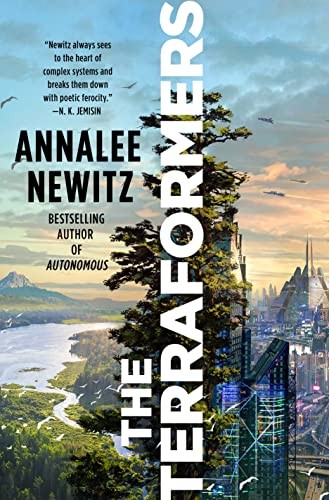
Newitz’s novel spans roughly sixty thousand years on Sask-E, a planet owned outright by the interstellar real-estate company Verdance and shaped generation by generation for eventual sale. The story follows three linked protagonists across that span: an environmental engineer investigating a volcano, a flying train-repair worker fighting for her own personhood, and a journalist decades later uncovering how the finished world was quietly built for the wealthy. Each section reframes what the planet’s transformation actually cost the workers who performed it.
Terraforming here is corporate infrastructure with its own labor hierarchy: the workers doing the ecological engineering are “decanted” from proprietary genetic templates, classified by species and function, and legally owned by Verdance, which can revoke their personhood if they become inconvenient. The planet’s ecosystems are monitored through embedded biological sensors that treat environmental health as a return on investment, and the final section shows Verdance restricting who is allowed to live in the world its workers built, turning the finished terraforming project into an instrument of exclusion. The book uses this structure to trace how extraction and gentrification repeat themselves across tens of thousands of years.
Newitz has said the novel grew partly out of wanting multigenerational stories about solving large problems, noting in an interview with The Stranger that “we don’t have a lot of stories that are multigenerational about solving big problems.” They have also pointed to San Francisco’s repeated waves of development and displacement as a direct model for the book’s closing section on gentrification, extending a real urban pattern across deep time.
Terraforming Earth by Jack Williamson (2001)
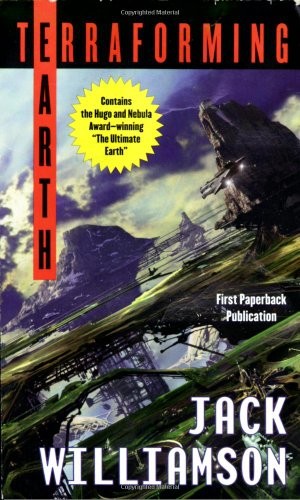
An asteroid strikes Earth and sterilizes it of nearly all life, leaving a small lunar colony at Tycho Base as humanity’s only refuge. Rather than following one continuous cast, the novel jumps across repeated attempts, spaced millions of years apart, in which cloned descendants of the original survivors return to a healed but unrecognizable Earth to try to rebuild civilization on it. Each cycle ends differently, and each new group of clones must relearn what it means to be human on a planet that keeps outliving them.
The book treats terraforming as a repeatable, almost geological process rather than a single completed engineering feat: robotic systems and cloned caretaker generations nurse the wrecked planet back through successive ecological stages over deep time, and the novel’s structure of resets mirrors that slow, repeated cycle. Each returning generation must terraform Earth anew after their own civilization collapses, so the technology becomes less a triumph than a recurring, exhausting labor performed by people who never see the finished result. The novel expands Williamson’s Hugo and Nebula Award-winning novella “The Ultimate Earth,” which forms its opening section.
Williamson holds a documented place in the term’s own history: his 1942 Astounding Science Fiction story “Collision Orbit” contains what reference sources identify as the first published use of “terraform,” describing an engineer hired “to terraform the little rock” by installing artificial gravity and generating oxygen from mineral oxides. No interview statement about this specific novel’s ecological themes could be located, but Williamson’s sixty-year career as one of the field’s earliest and longest-working writers, honored as one of science fiction’s first Grand Masters, makes him the author most directly responsible for the vocabulary the rest of this list depends on.
Explore Related Ideas
- 5 SFF Books About Space Elevators
- 5 SFF Books About Dyson Spheres and Dyson Swarms
- 5 SFF Books About Uplifted Animals
- 5 SFF Books About Generation Ships
- 5 SFF Books About Post-Scarcity Societies
- 5 SFF Books About Sentient Trees
- 5 SFF Books About Mind Uploading as Death
- 5 SFF Books About First Contact as Colonial Encounter